
Mechanical contractors today are under more pressure than ever — tighter schedules, rising labor costs, complex building systems, and zero tolerance for field mistakes. Traditional 2D drawings simply can’t keep up with the level of coordination required on modern projects. That’s why BIM Modeling for Mechanical Contractors has shifted from a “nice-to-have” to a core requirement on commercial, industrial, and institutional jobs.
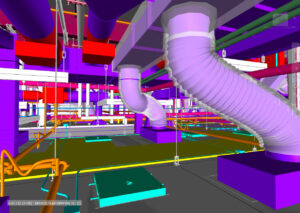
BIM (Building Information Modeling) isn’t just a 3D picture. It’s a complete digital workflow that helps mechanical contractors plan, coordinate, fabricate, and install their systems with far greater accuracy and efficiency. From HVAC ductwork to hydronic piping to plumbing systems, BIM gives contractors the clarity they need to avoid rework and deliver projects on time.
What Is BIM Modeling for Mechanical Contractors?
BIM Modeling for Mechanical Contractors involves creating intelligent 3D models of mechanical systems — HVAC, ductwork, piping, plumbing, and fire protection. These models include:
- Dimensions and elevations
- Materials and specifications
- Equipment data
- Hanger locations
- Clearance zones
- Installation details
Unlike traditional CAD drawings, BIM models are fully coordinated with architectural, structural, electrical, and other trades. This allows mechanical contractors to identify conflicts early, optimize routing, and ensure smooth installation in the field.
What Services Are Included in BIM Modeling for Mechanical Contractors?
Professional BIM support for mechanical contractors typically includes:
Detailed 3D models of HVAC, piping, and plumbing systems that show exactly how the mechanical scope fits within the building.
Clash Detection & Coordination
BIM identifies conflicts with steel, walls, ceilings, electrical conduits, and other systems long before construction begins — reducing costly field changes.
Contractor‑ready shop drawings and fabrication models support:
- Prefabrication
- Spool drawings
- Hanger layouts
- Field installation
This improves accuracy and speeds up production.
- As‑Built BIM Models
Accurate as‑built models document final installed conditions for facility management and future renovations.
Why Is BIM Modeling Important for Mechanical Contractors?
Improved Accuracy
Every duct, pipe, and fitting is modeled to exact dimensions, reducing design errors and field conflicts.
Better Coordination
Mechanical systems interact with every other trade. BIM ensures your work fits the first time.
Time and Cost Savings
Early clash detection, prefabrication, and streamlined installation reduce labor hours and change orders.
Stronger Client Confidence
Clear 3D visuals help owners, GCs, and engineers understand your design and trust your approach.
Why Mechanical Contractors Choose Advantage Engineering Technologies
At Advantage Engineering Technologies, PLLC, we specialize in BIM Modeling for Mechanical Contractors. Our team understands the real‑world challenges contractors face on complex projects — tight spaces, aggressive schedules, and the need for precise coordination.
We deliver:
- Fully coordinated, clash‑free mechanical models
- Accurate shop drawings and spool sheets
- Fabrication‑ready deliverables
- Clear communication with GCs and other trades
- Fast turnaround without sacrificing quality
Our focus is simple: help mechanical contractors reduce rework, improve productivity, and deliver successful projects.
Why Hire BIM Modeling Services Instead of Doing It In‑House?
Access to Skilled BIM Professionals
Experienced BIM modelers who understand mechanical systems, industry standards, and software best practices.
Focus on Field Work
Your team stays focused on installation, supervision, and project delivery — not modeling.
Scalable Support
Whether it’s a small renovation or a large industrial facility, BIM resources scale with your project.
Faster Turnaround & Compliance
Professional BIM teams deliver faster and ensure compliance with LOD requirements, GC standards, and project specifications.
Key Factors for Successful BIM Modeling
- Clear Project Scope
Defined system requirements and LOD expectations prevent rework.
- Accurate Design Inputs
Reliable architectural and structural backgrounds are essential for accurate mechanical modeling.
- A Solid BIM Execution Plan (BEP)
A BEP outlines workflows, responsibilities, file formats, and coordination procedures.
- Collaboration Between Trades
BIM works best when all trades share updates and coordinate regularly.
- Use of Industry‑Standard Software
Revit, Navisworks, and AutoCAD MEP ensure compatibility and high‑quality results.
How BIM Helps Mechanical Contractors Win More Projects
- More accurate bids and takeoffs
- Reduced risk and fewer change orders
- Stronger relationships with GCs and owners
- Better project outcomes and repeat business
Contractors who use BIM are viewed as more professional, more reliable, and more capable of handling complex work.
Is BIM Modeling Suitable for All Mechanical Projects?
Absolutely. BIM is used across:
- Commercial buildings
- Residential developments
- Hospitals and healthcare facilities
- Industrial plants
- Data centers
- Airports and transportation hubs
No matter the project size, BIM improves planning, coordination, and installation.
FAQs
- What is BIM Modeling for Mechanical Contractors?
It’s the process of creating intelligent 3D models of mechanical systems to improve planning, coordination, and installation.
- How does BIM reduce project errors?
Clashes and design conflicts are identified during modeling instead of during construction, reducing rework and delays.
- Is BIM useful for small projects?
Yes — even small jobs benefit from accurate layouts and coordinated installations.
- What deliverables can contractors expect?
3D models, coordinated shop drawings, spool sheets, clash reports, and as‑built models.
- Why outsource BIM modeling?
It provides access to skilled professionals, reduces overhead, speeds up delivery, and lets your team focus on field work.
Conclusion
In today’s construction environment, BIM Modeling for Mechanical Contractors is no longer optional. It improves accuracy, reduces risk, strengthens coordination, and helps contractors deliver higher‑quality projects.
Mechanical contractors who invest in BIM today are better positioned to win work, satisfy clients, and stay competitive as the industry continues to evolve.
BIM presently will be more favorably set for upcoming hurdles.